eksposisyon
eksposisyón with stress marks
exposition
Usage Note
Eksposisyon is used in literary and academic contexts for the introductory or explanatory section of a narrative or argument, and also refers to a large-scale public exhibition or trade fair. Both meanings are in active use in Philippine schools and media.
Examples
" Mataas ang eksportasyon ng saging. "
Natural Translation
The exportation of bananas is high.
Literal Translation
High the exportation of banana.
" Sa eksposisyon ng nobela, ipinakilala ang lahat ng pangunahing tauhan. "
Natural Translation
In the novel's exposition, all the main characters were introduced.
Literal Translation
In-the exposition of-the novel, introduced the all of-the main characters.
" Kapag bumagsak ang presyo ng langis sa mundo, apektado rin ang eksportasyon ng iba pang produkto mula sa ating bansa. "
Natural Translation
When the world price of oil drops, the exportation of other products from our country is also affected.
Literal Translation
When fell the price of oil in world, affected also the exportation of other products from our country.
Take Tagalog with you
The full course, a 12,500-word dictionary, and flashcards that make every word stick — free to start on iOS and Android.




Tagalog builds thousands of words from a few hundred roots.
How Tagalog words workRelated Words
Explore Tagalog by topic
Free guides on grammar, vocabulary, and culture to take you past single-word lookups.
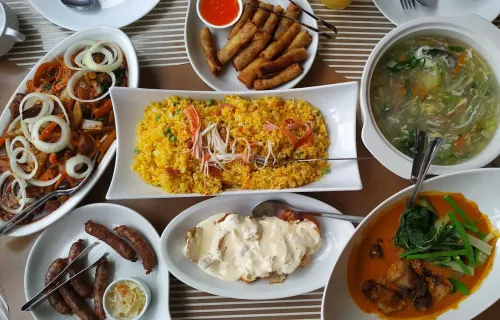
Filipino Food: 12 Essential Dishes (With Tagalog Names)
Filipino food, from adobo to halo-halo: learn the Tagalog names, pronunciations, and ingredients behind 12 dishes you'll want to try on your first trip.
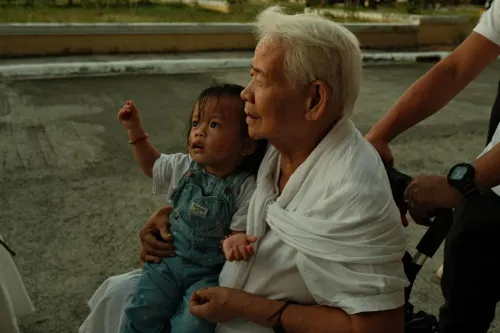
Po and Opo in Tagalog: Where to Put Them Right
Po and opo confuse learners — but placement follows one rule. Where po goes in a sentence, why it's opo not 'oo po', and the pronoun shift to learn.

Philippine Christmas Traditions: World's Longest Holiday
Philippine Christmas traditions run four months — from Ber-month carols to Simbang Gabi dawn masses, Noche Buena feasts, and parol lanterns lighting every street.

Tagalog Numbers 1-100: Counting, Time & Money Explained
Learn Tagalog numbers 1-100 and beyond. Master both native and Spanish-derived counting systems, plus telling time, reading prices, and ordinals.