kaba
kabâ with stress marks
premonition; heart palpitation, nervousness
Usage Note
Kaba captures both the physical sensation of a racing heart and the psychological state of nervous anticipation — Filipinos use it to describe pre-event jitters before a performance, exam, or important meeting. The word bridges the bodily and emotional in a way that reflects a holistic Filipino understanding of feelings.
Examples
" May kaba ang dibdib ko. "
Natural Translation
My chest feels nervous.
Literal Translation
Has palpitation the chest my.
" Ang kaba niya ay dahil sa takot. "
Natural Translation
His/Her nervousness is because of fear.
Literal Translation
The palpitation his/her is because in fear.
" Bago tumawag ang aking pangalan, ramdam ko ang kaba sa aking dibdib na para bang lalabas ang aking puso. "
Natural Translation
Before my name was called, I felt the nervousness in my chest as if my heart was about to leap out.
Literal Translation
Before called the my name, felt I the palpitation in my chest as if will-come-out the my heart.
Take Tagalog with you
The full course, a 12,500-word dictionary, and flashcards that make every word stick — free to start on iOS and Android.




Tagalog builds thousands of words from a few hundred roots.
How Tagalog words workRelated Words
Explore Tagalog by topic
Free guides on grammar, vocabulary, and culture to take you past single-word lookups.

Mano Po and Filipino Etiquette: A Visitor's Guide
Mano po presses an elder's hand to your forehead as a blessing. Learn who to mano, how to lip-point, and the etiquette that wins over a Filipino family.

Tagalog Affixes Explained: A Beginner's Guide to Word Building
Tagalog affixes turn one root word into dozens of meanings. Learn prefixes, infixes, suffixes, and circumfixes with clear examples for beginners.

Filipino Food: 12 Essential Dishes (With Tagalog Names)
Filipino food, from adobo to halo-halo: learn the Tagalog names, pronunciations, and ingredients behind 12 dishes you'll want to try on your first trip.
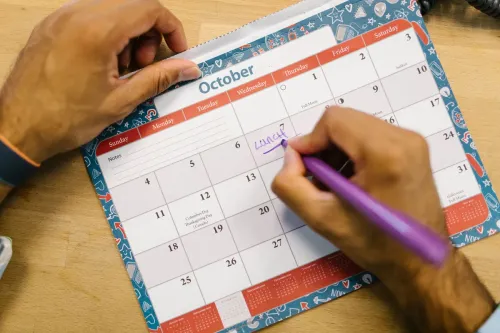
Days of the Week and Months in Tagalog
The days of the week and months in Tagalog are Spanish loanwords. Learn all 7 days and 12 months with pronunciation, plus how to say dates and 'every Monday.'