nakaw
nákaw with stress marks
steal; rob; stolen
Also means
As an adjective or noun, 'nakaw' can describe stolen goods — 'gamit na nakaw' (stolen item).
Usage Note
Nakaw is the root word for theft in Tagalog, with verb forms including magnakaw to steal and nakawin to steal something specific. It is also used figuratively in literature and song — nakaw na sandali describes a stolen moment.
Examples
" Nakaw ang relo niya. "
Natural Translation
His watch is stolen.
Literal Translation
Stolen the watch his.
" Hindi niya inamin na ang pera sa kanyang bulsa ay nakaw. "
Natural Translation
He/She did not admit that the money in his/her pocket was stolen.
Literal Translation
Not he/she admitted that the money in his/her pocket is stolen.
" Hindi maganda ang kita mula sa nakaw, sapagkat madalas itong nauuwi sa kahihiyan at sa bilangguan. "
Natural Translation
Earnings from theft are no good, because they often end in shame and in prison.
Literal Translation
Not good the earnings from stolen, because often this ends-up in shame and in prison.
Take Tagalog with you
The full course, a 12,500-word dictionary, and flashcards that make every word stick — free to start on iOS and Android.




Tagalog builds thousands of words from a few hundred roots.
How Tagalog words workDerived Words
Actor Focus Verbs
Object Focus Verbs
Related Words
- AWOL absence without leave
- Amboy short for American boy
- Ati ethnolinguistic group in Panay
- Balbalan ethnolinguistic group (Kalinga)
- Hiligaynon ethnolinguistic group/language
- Ilokana female native of the Ilocos region; Ilokana woman
- Ilokano Ethnolinguistic group in Ilocos
- Ilonggo Language/People of Western Visayas
Explore Tagalog by topic
Free guides on grammar, vocabulary, and culture to take you past single-word lookups.

Mano Po and Filipino Etiquette: A Visitor's Guide
Mano po presses an elder's hand to your forehead as a blessing. Learn who to mano, how to lip-point, and the etiquette that wins over a Filipino family.
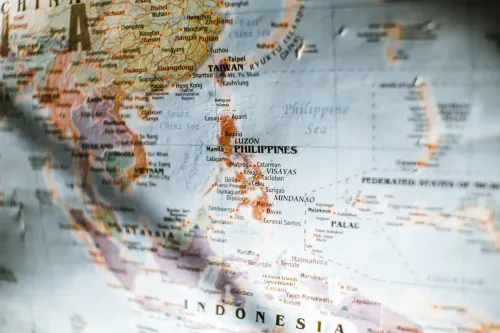
Philippines Geography for Learners: Islands & Language
Philippines geography for Tagalog learners: 7,641 islands, three island groups, and the Southern Luzon heartland where the Tagalog language was born.
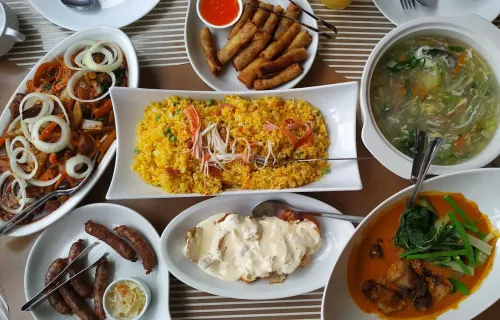
Filipino Food: 12 Essential Dishes (With Tagalog Names)
Filipino food, from adobo to halo-halo: learn the Tagalog names, pronunciations, and ingredients behind 12 dishes you'll want to try on your first trip.

Magkano: How to Ask "How Much" in Tagalog
Magkano means how much in Tagalog. Learn to ask a price, tell it apart from ilan and gaano, sound polite with po, and haggle at the palengke.