ngulungkot
ngulungkót with stress marks
lethargy or sluggishness due to fear or illness
Usage Note
Ngulungkot is a rare and specific word describing the heavy, withdrawn sluggishness that comes over a person who is ill, frightened, or deeply troubled. It combines the sense of physical listlessness with emotional withdrawal, and is typically found in literary or classical Tagalog texts.
Examples
" Ngulungkot ang bata dahil sa lagnat. "
Natural Translation
The child became listless because of the fever.
Literal Translation
Listless the child because of fever.
" Isang matinding ngulungkot ang bumalot sa kanya matapos magkasakit. "
Natural Translation
A severe lethargy enveloped him/her after getting sick.
Literal Translation
One severe lethargy the enveloped to him/her after get-sick.
" Matapos marinig ang nakakatakot na balita, ngulungkot siya nang ilang araw at ayaw kumain o makipag-usap sa kahit kanino. "
Natural Translation
After hearing the frightening news, he/she fell into a withdrawn listlessness for several days and refused to eat or talk to anyone.
Literal Translation
After hear the frightening news, listless he/she for several days and unwilling eat or talk to even anyone.
Take Tagalog with you
The full course, a 12,500-word dictionary, and flashcards that make every word stick — free to start on iOS and Android.




Tagalog builds thousands of words from a few hundred roots.
How Tagalog words workRelated Words
Explore Tagalog by topic
Free guides on grammar, vocabulary, and culture to take you past single-word lookups.

Tagalog Word Order: Sentence Structure Made Simple
Why Tagalog puts the verb first, and how ang, ng, and sa markers work. A clear guide to VSO word order, forming questions, and negation.

Tagalog Verb Conjugation: Aspects Made Simple
Tagalog verb conjugation uses aspects, not tenses. Learn the three aspects with -um- and mag- verbs, one reduplication rule, and clear example tables.
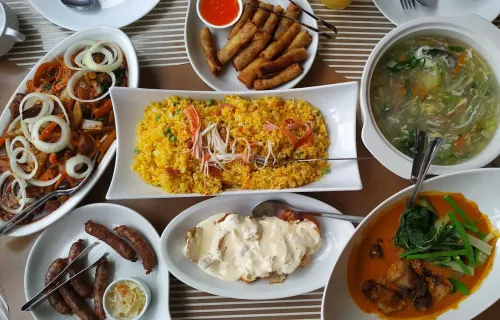
Filipino Food: 12 Essential Dishes (With Tagalog Names)
Filipino food, from adobo to halo-halo: learn the Tagalog names, pronunciations, and ingredients behind 12 dishes you'll want to try on your first trip.

Philippine Christmas Traditions: World's Longest Holiday
Philippine Christmas traditions run four months — from Ber-month carols to Simbang Gabi dawn masses, Noche Buena feasts, and parol lanterns lighting every street.