ulat
ulát with stress marks
report
Usage Note
Ulat is the standard Tagalog word for a report or account of events, used in journalism, business, academic, and government contexts. The verb form mag-ulat means to report. It is a neutral, formal term preferred over borrowed alternatives in official Filipino communications. News broadcasts commonly use ulat and ulat-balita (news report).
Examples
" Ibibigay ko ang ulat mamaya. "
Natural Translation
I will give the report later.
Literal Translation
Will-give I the report later.
" Kailangan mong magsumite ng ulat bukas sa umaga. "
Natural Translation
You need to submit a report tomorrow morning.
Literal Translation
Need you to-submit of-a report tomorrow in-the morning.
" Ayon sa ulat ng mga awtoridad, walang nasugatan sa aksidente kahit malaki ang naging pinsala sa mga sasakyan. "
Natural Translation
According to the authorities' report, no one was injured in the accident even though the damage to the vehicles was significant.
Literal Translation
According to-the report of the authorities, none injured at accident even-though big the became damage to the vehicles.
Take Tagalog with you
The full course, a 12,500-word dictionary, and flashcards that make every word stick — free to start on iOS and Android.




Tagalog builds thousands of words from a few hundred roots.
How Tagalog words workActor Focus Verbs
Object Focus Verbs
Related Words
Explore Tagalog by topic
Free guides on grammar, vocabulary, and culture to take you past single-word lookups.

Ng vs Nang in Tagalog: The Spelling Rule
Ng vs nang sound identical but spell differently. Use ng to mark nouns (of, the object), and nang for how, when, repetition, and counting time.
Po and Opo in Tagalog: Where to Put Them Right
Po and opo confuse learners — but placement follows one rule. Where po goes in a sentence, why it's opo not 'oo po', and the pronoun shift to learn.

Philippine Christmas Traditions: World's Longest Holiday
Philippine Christmas traditions run four months — from Ber-month carols to Simbang Gabi dawn masses, Noche Buena feasts, and parol lanterns lighting every street.
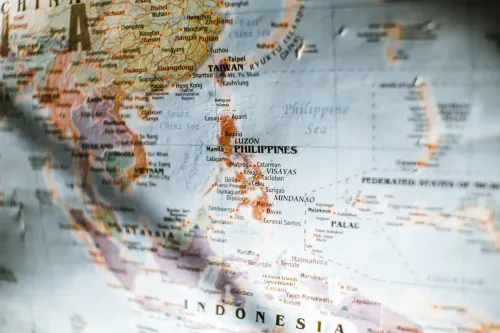
Philippines Geography for Learners: Islands & Language
Philippines geography for Tagalog learners: 7,641 islands, three island groups, and the Southern Luzon heartland where the Tagalog language was born.